
What San Luis Obispo Homeowners Need to Know About WUI Requirements (and Why It Matters)
If your San Luis Obispo County home sits near open spaces, canyons, hillsides, or wildland edges, it likely falls in a Wildland-Urban Interface (WUI) zone. In these high-risk areas, one of the most critical yet often overlooked wildfire hardening measures is upgrading your attic and soffit venting.
Why vents matter: During wildfires, wind-driven embers can travel miles ahead of the flames and enter homes through vulnerable openings—long before direct fire contact. Soffit and eave vents are prime entry points for these embers, which can ignite attics and lead to structure loss.
This post explains exterior fire-rated soffit vents, including self-closing technology (such as the Vulcan fire-rated soffit vents), and how they help meet California's WUI standards.
What Is a Soffit Vent—and Why Fire-Rated Versions Differ Soffit vents are installed under the eaves (the underside of roof overhangs) to provide essential airflow into the attic for ventilation, temperature regulation, and moisture control.
Standard vents allow easy ember entry. Fire-rated/ember-resistant soffit vents maintain airflow under normal conditions but resist ember intrusion and flame penetration during wildfire exposure—precisely what California's WUI codes require.
The Key Code: California Building Code Chapter 7A Chapter 7A of the California Building Code governs wildfire-resistant construction in WUI areas. It mandates that ventilation openings (including those in enclosed attics, under eaves, soffits, and rafter spaces) resist ember and flame intrusion.
Compliance options include:
Vents approved and listed by the California State Fire Marshal (SFM), or
Vents tested to ASTM E2886 (the standard for evaluating resistance to ember entry and direct flame impingement) and appropriately listed.
San Luis Obispo County and the City of San Luis Obispo incorporate these requirements into plan reviews, checklists, and wildfire preparedness guidance—especially for roof/eave conditions (open vs. enclosed eaves). Recent updates to the 2025 California WUI Code (effective 2026) reinforce ember-resistant venting as a core hardening strategy.
How Self-Closing Fire Soffit Vents Work (Vulcan-Style Technology) Self-closing WUI vents stay open for everyday ventilation but activate under wildfire conditions:
An ember-catching, noncombustible mesh screen blocks initial ember entry.
A heat-activated intumescent coating/matrix expands at high temperatures to close off openings, preventing ember and flame penetration.
This design delivers the ideal balance: reliable attic airflow in daily use + robust defense during ember storms or intense heat.
Important Note: "WUI-compliant" status depends on the product's specific listings, certifications, and interpretation by your local building authority (e.g., San Luis Obispo County or City). Always verify requirements with the building department for your project.
Why This Upgrade Matters in San Luis Obispo County Local homeowners are focusing on wildfire hardening for:
Permit compliance during new builds, remodels, or additions in WUI zones.
Reduced ignition risk—attic vulnerabilities via embers remain a leading cause of home loss.
Increased resale value and insurability in higher-risk areas.
The City of San Luis Obispo's wildfire preparedness resources specifically highlight ember- and fire-resistant vents, enclosed eaves, and related measures as key to resilient construction.
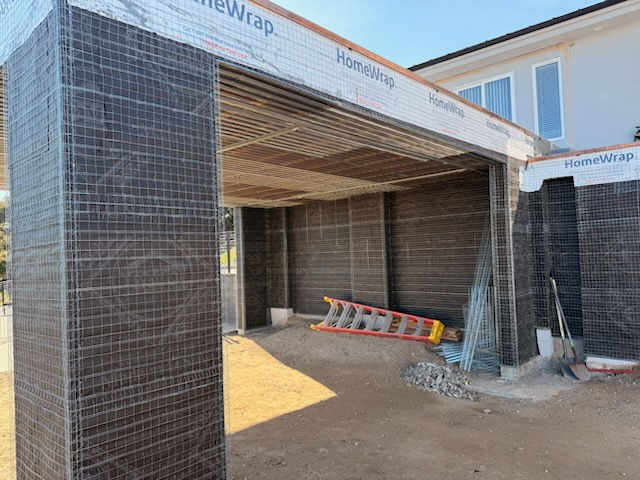
We evaluate the full eave system for effective upgrades:
Open vs. Enclosed Eaves — Open eaves offer more ember pathways; enclosed/boxed soffits are often preferred or required in WUI zones.
Proper Placement and Fastening — Gaps, poor fastening, or missing blocking can compromise even top-rated vents.
Balanced Ventilation — Ensure upgrades don't restrict airflow excessively, which could cause moisture issues—especially in San Luis Obispo's coastal-influenced climates.
Ongoing Maintenance — Clean vents periodically to remove dust, debris, or insulation; check after windy seasons.
Need WUI Hardening Help in San Luis Obispo County? If you're building, remodeling, or retrofitting for wildfire resilience, we can assess:
Your home's WUI exposure and venting vulnerabilities.
Existing soffit/eave construction (open vs. enclosed).
Upgrade options, including self-closing fire-rated soffit vents.
A ventilation-balanced installation plan tailored to local codes.

Contact us for a consultation—we'll guide you toward solutions that match your home, budget, and requirements.
Nghe tiêu đề kiểu “soi cầu MB ngày 3 9 2026” là mình nghĩ chắc nội dung sẽ dài dòng lắm. soi cầu xsmb mà vào lướt thử thì thấy trang làm cũng gọn gàng, đọc nhanh vẫn nắm được ý. Mình không bàn chuyện số má đúng sai, chỉ xem cách họ trình bày thôi. Họ để phần dự đoán theo ngày thành bài riêng, ngay đầu bài có heading rõ nên khỏi phải tìm. Bên dưới có đoạn giải thích họ dựa trên thống kê kết quả quay trước để lọc ra cặp số “đẹp”, viết thẳng, không vòng vo. Cuộn xuống từng khối nội dung tách ra khá rành mạch, nhìn phát biết đang ở mục “Dự…
Mình chơi xổ số kiểu giải trí là chính, xem cho vui thôi, trúng thì có thêm niềm vui còn không trúng cũng chẳng áp lực gì. Trước đây nghe bạn bè bàn chuyện “cầu” với “kèo” đủ thứ nên mình tò mò thử tìm hiểu, mà mới đầu thấy loạn hết cả lên. Sau một thời gian theo dõi, mình bắt đầu ghi lại vài ý khi đọc nhận định, rồi so với kết quả để tự kiểm tra xem có bị tâm lý dẫn dắt không. Lâu lâu mình ghé soicauxsmb.io để có thêm chuyện nói cho vui, nhưng mình luôn tự nhắc là đừng tin tuyệt đối. Có hôm trúng chút thì cười, có hôm lệch xa…
This was a very engaging and insightful post that made statistical concepts much easier to understand. I really liked how the author explained ideas in a clear and structured way, breaking down complex topics into simple steps. As a student in the UK, I often read blogs like this to improve my understanding of statistics. During busy academic periods, many learners also look for statistics assignment help UK to manage challenging topics like hypothesis testing and data analysis. Posts like this provide both clarity and motivation, helping students stay confident in their studies.